

Rooted in the Southwest: Finding Yerba Mansa
Rooted in the Southwest: Finding Yerba Mansa
We were just steps away from losing hope. Losing hope that our four-hour drive would actually lead us to the plant we were searching for—a plant needed for a project, but really, a connection to a Southwestern herb that had captured our curiosity.
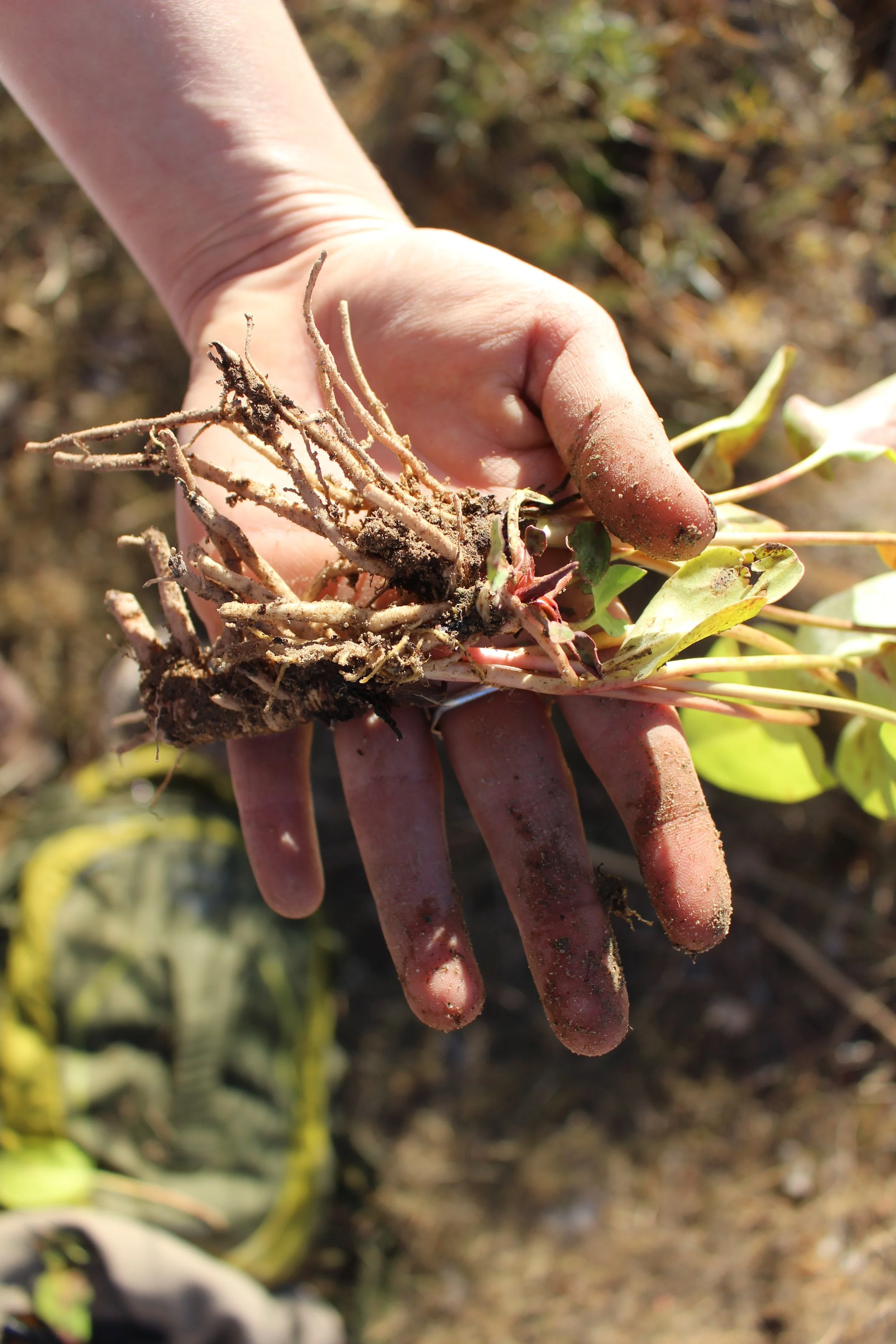
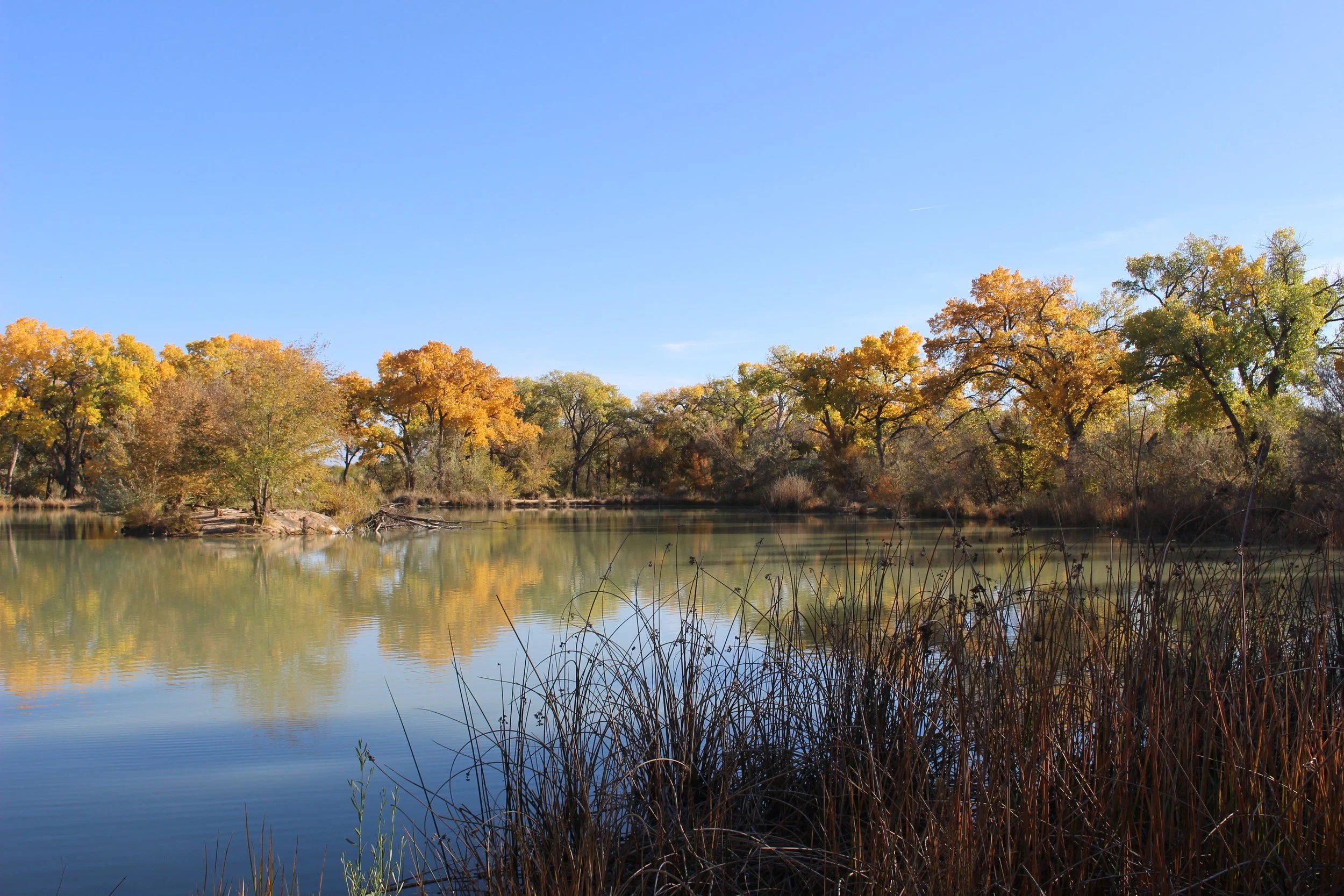
We had been searching along the Rio Grande bosque in New Mexico for Yerba Mansa (Anemopsis californica). Just before giving up, hidden along a shaded stream, there she was.
For the rest of that day, it felt as though something had unlocked. Suddenly, we were spotting it everywhere. We carefully harvested a small portion of the root, leaving the surrounding stolons and main rhizomes intact so the stand could continue to thrive, saving our harvest for a rainy day.
That rainy day eventually sparked the creation of our Rooted Recovery Body Oil. Ever since, I’ve been captivated by this plant. There is always more to learn and endless inspiration to draw from it. Truthfully, it’s hard not to include it in every formula I touch.
Gentle Name, Powerful Nature
Yerba — Spanish for herb
Mansa — Spanish for meek, tame, or gentle
There is a beautiful irony in its name: while "mansa" suggests mildness, the plant's restorative nature is anything but quiet. Native to the Southwestern United States and Northern Mexico, Yerba Mansa has a deep history of traditional use among Native American tribes. For example, the Shoshone tribe of Nevada traditionally applied a root poultice to areas of inflammation and infection, while the Nevada Paiute utilized root decoctions to ease body discomfort (1).
While traditional wisdom and field experience highlight Yerba Mansa’s affinity for soothing sore muscles and tired joints, modern human clinical studies remain limited. Still, there is immense value in honoring lineage and trusting lived experience.
It also helps that the root carries an unforgettable aromatic profile—a grounding blend of eucalyptus, camphor, and a subtle peppery spice. This scent alone invites the body to settle and soften, amplifying the physical relief of topical application through the power of olfactory aromatics.
Science & Tradition Hand-in-Hand
Modern phytochemical research is beginning to map what traditional herbalists have known for generations. The lipophilic (fat-soluble) constituents extracted from the roots—such as the lignans sesamin and asarinin—along with its essential oil profile, showcase significant biological activity, including antimicrobial and soothing properties (1, 2).
While I look forward to seeing more clinical research emerge, Yerba Mansa remains an absolute staple for outdoor recovery—especially after a demanding trail day. Nothing quite beats reaching an alpine lake or finishing a steep summit and applying Yerba Mansa oil to tired muscles.
References & Citations
Bussey, R. O., 3rd, Sy-Cordero, A. A., Figueroa, M., Carter, F. S., Falkinham, J. O., 3rd, Oberlies, N. H., & Cech, N. B. (2014). Antimycobacterial furofuran lignans from the roots of Anemopsis californica. Planta medica, 80(6), 498–501.
Medina-Holguín, A. L., Holguín, F. O., Micheletto, S., Goehle, S., Simon, J. A., & O'Connell, M. A. (2008). Chemotypic variation of essential oils in the medicinal plant, Anemopsis californica. Phytochemistry, 69(4), 919–927.
